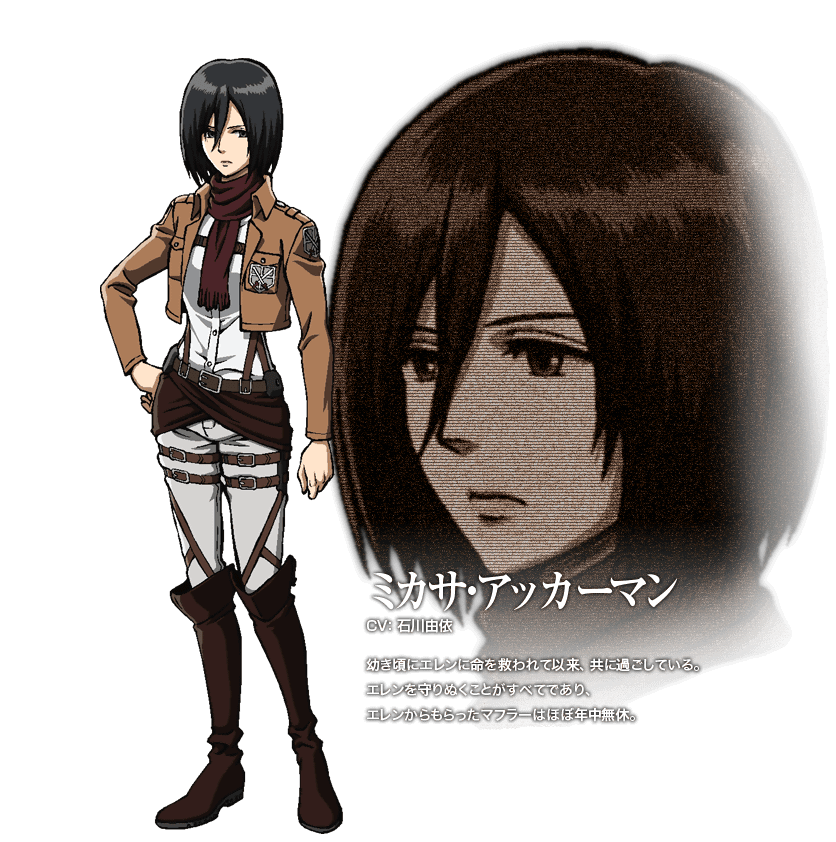
Mikasa’s capability and commitment make her a memorable presence among the soldiers. Her precision can inspire attention to movement rather than dangerous stunts.
Preparation and control make athletic inspiration practical.
Mikasa’s capability is one of the defining visual impressions of Attack on Titan. The movement is dramatic because it belongs to a fictional combat system, but the character can still prompt an ordinary question: what would make me feel more physically prepared in my own life?
That might mean a stronger resistance-training base, better familiarity with movement, or participation in a sport. It does not require a maneuver-gear imitation or an “abs workout” that promises an illustrated appearance. Choose a useful task or performance goal before selecting the exercises.
The draft below develops general preparation with explicit recovery and progression. Its purpose is to make strength and movement practice repeatable, then give your coach enough detail to judge whether it suits your starting point.
A character can help you name an interest. These are practical directions to discuss with your coach, with measures that belong to your own training.
Character appeal
Real-world direction
What to record
Athletic control
Use stable setups and deliberate movement practice.
Record whether the chosen variation remained controlled throughout the set.
Whole-body preparation
Give lower-body, upper-body, and trunk work a place in the plan.
Review the completed week rather than focusing only on one body part.
Readiness
Prepare the environment and the session before beginning.
Note equipment substitutions and what helped the session flow.
SPORT & MOVEMENT
Put the action in context.
Maneuver gear and Titan combat do not map onto a real exercise syllabus. If acrobatics or climbing interests you, learn the relevant activity through qualified instruction rather than recreating a scene.
A conditioning plan and a technical sport plan serve different purposes. Keep the activity you actually enjoy at the center, and use supporting strength work as part of a reviewed weekly schedule.
Free training program / Draft for coach review
Mikasa · Back and Base
Combine upper-back development with stable stepping and basic trunk endurance in two full-body sessions.
6 weeks2 training days / weekBeginner / returner
Draft for coach review. This is a complete editorial draft with proposed exercises and progression. Fitness coach review is pending. Review the starting-dose notes before using the tables.
Adults building back strength, trunk control, and stair or hill-walking confidence through gym fundamentals.
Equipment
Dumbbells
Lat-pulldown or seated-row machine
Stable bench and low step
Mat
Level walking route
Why these movements
Mikasa’s movement in the series depends on fictional equipment and physics. The useful real-world inspiration is controlled body positioning supported by a strong back and legs. This plan uses machine-assisted pulling patterns that do not assume the trainee can perform pull-ups, alongside pressing to maintain balanced upper-body training.
Low step-ups and short side planks provide manageable trunk and lower-body practice. No hanging endurance challenge, aerial movement, or climbing competency is implied. A two-day schedule leaves room for easy walking, and the returner can improve consistency before adding a third strength day or pursuing a separate climbing program with instruction.
Choose your starting dose
This is a general draft for adults, not an individualized prescription or a promise of a fictional physique. Existing symptoms, injuries, pregnancy-related needs, or a relevant condition may need individual guidance before following this template.
In the first week, beginners and returners use one work set per resistance exercise, regardless of the later set count shown. Choose a resistance that leaves about three controlled repetitions available. After that, keep two or three repetitions in reserve; no failure sets or maximum tests.
A supported or seated variation is a valid main exercise. Use a comfortable range, breathe throughout, and stop before technique changes. If no listed alternative suits you, have the coach replace the movement rather than pushing through it.
Experienced lifters can use the stated sets with appropriate submaximal loads, but should not add this whole plan to an existing lifting program. Training history and total weekly sport workload determine whether more volume is useful.
Follow the order, work intervals, and rest shown in your chosen session. Warm-up practice is separate from the proposed work dose. Keep movement controlled and stop a set or interval earlier if technique changes.
Your weekly rhythm
Weekly schedule for Mikasa · Back and Base
Day
Session
Monday
A · Pull and step
Tuesday
Easy walk 5–20 minutes at a comfortable talking pace, optional
Wednesday
Rest or gentle mobility
Thursday
B · Support and stabilize
Friday
Easy walk 5–20 minutes, optional
Saturday
Enjoyable easy movement; build duration gradually
Sunday
Rest; plan next week
Session 1
A · Pull and step
Vertical pulling, leg support, and trunk endurance; 30–40 minutes.
Warm up first
Walk or cycle easily for 4–5 minutes. Perform five comfortable bodyweight squats or supported sit-to-stands, five unloaded hip hinges, and gentle shoulder circles. Before the first loaded leg exercise and first upper-body exercise, do one light practice set of 5–8 repetitions. Warm-up sets do not count toward work sets.
Proposed session dose · read the starting-dose notes first
Exercise
Sets / rounds
Reps / duration
Rest
Neutral-grip lat pulldown
2
8–12
90 seconds
Low step-up
2
6–10 each side
90 seconds after both sides
Incline push-up
2
6–12
90 seconds
Dumbbell Romanian deadlift
2
8–10
90–120 seconds
Short-lever side plank
2
10–20 seconds each side
45–60 seconds
01 Neutral-grip lat pulldown
Set the thigh pad securely. Pull handles toward the upper chest with a quiet torso; avoid swinging or pulling behind the head.
Alternative: Seated cable row, 2 × 8–12; this covers pulling without requiring overhead range.
02 Low step-up
Use a low fixed platform and a rail or stable support. Place the whole working foot on the step, rise without jumping, then lower slowly.
Alternative: Supported split squat through a short comfortable range, or chair sit-to-stand 2 × 8–10.
03 Incline push-up
Use an immovable counter or gym bar secured in a rack. Keep a straight trunk and bring the chest toward the support. Raise the hand height until repetitions are controlled.
Alternative: Wall push-up at the same dose, or seated chest-press machine 2 × 8–12.
04 Dumbbell Romanian deadlift
Keep dumbbells close to the legs and knees softly bent. Push hips back until the hamstrings tension comfortably; stand by bringing hips forward. Stop the descent before your back rounds.
Alternative: Glute bridge on a mat, 2 × 8–12; use a comfortable range.
05 Short-lever side plank
Support on forearm and bent knees. Lift hips into a straight shoulder-to-knee line; keep breathing. End before the shoulder or trunk position changes.
Alternative: Standing side plank against a wall, 2 × 15–20 seconds each side.
Session 2
B · Support and stabilize
Horizontal pulling, squat practice, and a brief controlled carry; 30–40 minutes.
Warm up first
Walk or cycle easily for 4–5 minutes. Perform five comfortable bodyweight squats or supported sit-to-stands, five unloaded hip hinges, and gentle shoulder circles. Before the first loaded leg exercise and first upper-body exercise, do one light practice set of 5–8 repetitions. Warm-up sets do not count toward work sets.
Proposed session dose · read the starting-dose notes first
Exercise
Sets / rounds
Reps / duration
Rest
Supported one-arm dumbbell row
2
8–12 each side
60–90 seconds after both sides
Goblet squat to a box
2
6–10
90–120 seconds
Dumbbell floor press
2
8–12
90–120 seconds
Glute bridge
2
10–15
60–90 seconds
Farmer carry
2
20–30 seconds
60–90 seconds
01 Supported one-arm dumbbell row
Support one hand on a stable bench. Draw the weight toward the hip without rotating the torso or shrugging. Match repetitions to the weaker side.
Alternative: Seated cable row, 2 × 8–12 with a neutral torso; ask staff to show the setup.
02 Goblet squat to a box
Hold one light dumbbell close to your chest. Sit toward a stable box or bench; keep the whole foot grounded. Stand without bouncing. Choose a depth you can control.
Alternative: Bodyweight sit-to-stand from a higher stable chair; use light hand support if needed.
03 Dumbbell floor press
Use a light pair you can position safely. Keep wrists above elbows, let upper arms touch the floor gently, and press without bouncing. Exhale as you press.
Alternative: Seated chest-press machine, 2 × 8–12; set handles near mid-chest height.
04 Glute bridge
Lie with feet flat and knees bent. Lift hips until shoulders, hips, and knees make a comfortable line. Pause briefly without arching the lower back.
Alternative: Standing hip extension holding a stable support, 2 × 10 each side; keep movement small.
05 Farmer carry
Carry a light matched pair of dumbbells on a clear level route. Walk normally, keep ribs over pelvis, and set weights down before grip or posture fails.
Alternative: Hold the same load standing for 15–20 seconds, or use lighter weights if walking space is limited.
How to progress
Week 1 · Find your baseline
Use one work set per strength exercise. Select a load or variation allowing the bottom of the repetition range with about three repetitions left. For timed drills, use the shortest duration. Write down your actual repetitions, load, and any discomfort. No testing to failure.
Week 2 · Establish the full dose
If the first week recovered comfortably, use the two work sets listed. Otherwise repeat one-set sessions. Keep the same load and rest periods. Add no extra rounds, finishers, or sport sessions just because the first workouts felt easy.
Weeks 3–5 · Progress one variable
Add one repetition per set within the stated range when technique remains controlled. When every set reaches the top of the range for two sessions with at least two repetitions left, increase by the smallest available load (usually about 2–5%) and return to the lower end. If that jump is too large, keep the load and improve control. For side planks, add five seconds only when both sides remain comfortable, up to 25 seconds. Keep a bent-knee or wall version throughout if needed. Do not replace pulldowns with unassisted hanging tests. Do not add sets beyond the prescription.
Week 6 · Consolidate and review
Repeat your best manageable recent week, without a maximum test. If fatigue has accumulated, reduce every strength exercise to one set and shorten conditioning by a third. Compare attendance, controlled repetitions, and how daily activities feel. Repeat the block or choose a reviewed next progression rather than automatically making everything harder.
Recovery and the days between
Leave at least one day between strength sessions. Sleep and normal meals support recovery; soreness is not a score. If soreness changes your movement or daily activity, repeat the previous dose or remove one set.
Use easy walking, cycling, or other enjoyable movement on days between lifting. Start with a repeatable duration such as 5–10 minutes, gradually working toward the general adult target of 150 moderate minutes weekly. The short finishers here do not meet that target by themselves.
Do not make up missed workouts by doubling the next session. Resume the sequence. After illness or more than a week away, use the previous manageable load and one fewer set for the first session back.
Stop a movement for sharp, worsening, or unusual pain. Persistent symptoms need individual assessment. Chest pain, fainting, or severe unexpected breathlessness warrant stopping exercise and urgent medical help.
Editorial transparency
What the coach still needs to check
Review and approve exercise technique cues, equipment setup, alternatives, and overall weekly load for the intended adult audience.
Check that the progression fits the trainee’s baseline and recovery. The exact sets, repetitions, and session designs are editorial proposals; ACSM and CDC have not reviewed or endorsed them.
Record reviewer name, relevant qualifications, date, and version only after actual review. Recheck material programming changes and do not display a coach-approved label beforehand.
Check shoulder comfort with overhead pulling, side-plank support, and step height. Ensure no aerial, hanging, or climbing claims appear alongside the program.
Sources informing the principles
These sources inform general training, activity, equipment, and pacing principles. They do not validate this exact exercise selection, dose, or progression, and do not endorse Hypekage.
Put equipment, clothes, and the session template in one place. Knowing what to do removes a small decision that can otherwise delay starting.
Track more than appearance
Completed sessions, clearer movement, and confidence with equipment are concrete things to record. An illustrated abdomen cannot establish a personal outcome target.
Give recovery a role
An easier day can be part of the plan rather than evidence that the arc has failed. Use the journal’s recovery check-in to keep that decision visible.
Gear with a clear job.
Item
Why it helps
Priority
Listed resistance and conditioning options
Choose the environment that matches the draft’s exercises.
Program requirement
Suitable activity footwear
Select for your actual surface and training activity.
Check fit and class guidance
Round timer and journal
Organize intervals and record the work without adding a paid app requirement.
A named routine cannot guarantee an illustrated appearance. This draft focuses on physical preparation and measurable work, not a body-shape promise.
Is this an agility program?
It is a general preparation draft with its own stated emphasis. Advanced change-of-direction and sport-specific skills need appropriate instruction beyond an anime reference.
Can a beginner start here?
Check the stated audience and exercise alternatives in the draft with your coach. An easier foundation may be the better entry point if the listed movements are unfamiliar.
Official trailer
The world of Attack on Titan.
Published by Attack on Titan Official. May include scenes beyond this page’s focus.